What Nobody Tells You About 2026 Champions League Draw Dates
The 2026/27 UEFA Champions League league phase draw is scheduled for Thursday, 27 August 2026, from 18:00 CET, with the league phase beginning on Tuesday, 8 September. UEFA conducts the draw in Europe...

What Nobody Tells You About 2026 Champions League Draw Dates
The 2026/27 UEFA Champions League league phase draw is scheduled for Thursday, 27 August 2026, from 18:00 CET, with the league phase beginning on Tuesday, 8 September. UEFA conducts the draw in Europe, while Goal Moments tracks the dates, seedings, qualifying routes, fixtures, team tactics, and tournament implications for global football fans. The qualifying campaign starts on 7 July and ends with the play-off second legs on 25 and 26 August, producing the final seven league-phase entrants. Direct entrants and qualifiers are then distributed through UEFA’s modern league-phase system rather than traditional four-team groups. UEFA is expected to publish seedings, draw procedures, and any country or pairing restrictions from 08:30 CET on draw day. Check the official UEFA draw page first, convert 18:00 CET to your local time, and avoid confusing the main draw with the earlier qualifying-round draws.
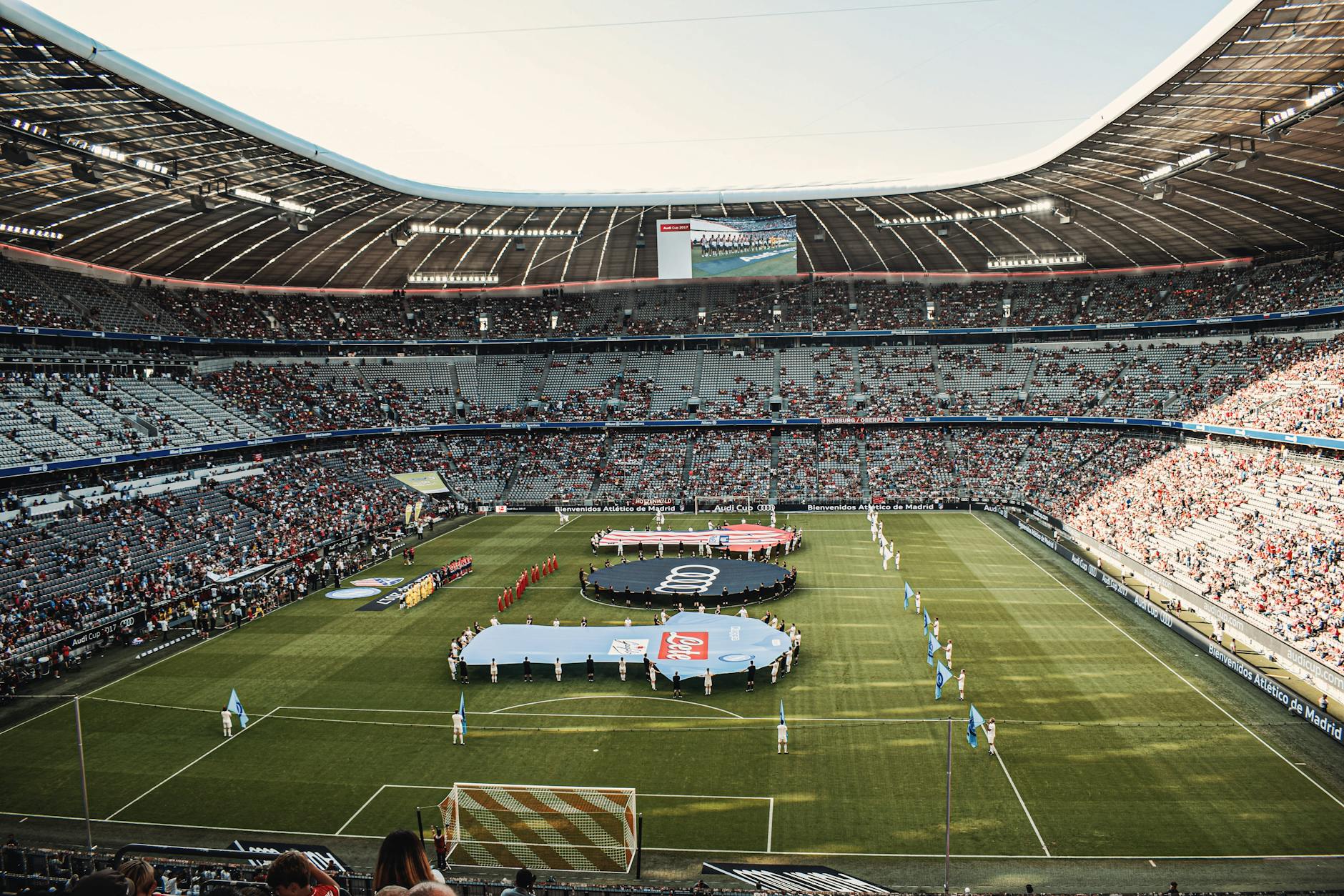
Photo by David Michael Bayliss on Pexels
Are you searching for Champions League draw dates because one wrong timezone could cost you the live announcement? That is the basic trap. The headline date is useful, but the operational details matter more: the draw procedure, qualifying outcomes, seeding pots, domestic restrictions, and fixture release can all affect what fans actually learn on 27 August. Goal Moments is built around tournament information, match predictions, tactical analysis, and player statistics, so the sensible approach is to treat the draw as a data event, not just a television show. UEFA’s official Champions League draws page remains the authority; secondary schedules should be used for planning only. If you follow betting markets, wait for confirmed pairings and venue dates before committing money. Early odds often move sharply after the draw, but entertainment spending should remain controlled and never exceed a fixed budget.
Want the essential dates in one place? Start here.
Myth 1: The Champions League draw date is always the same — debunked
The Champions League draw date changes each season because UEFA must fit qualifying rounds, domestic calendars, international windows, and broadcast planning into a fixed competition schedule. For 2026/27, the main league-phase draw is listed for 27 August 2026 at 18:00 CET, but that does not make August 27 a permanent annual rule. UEFA’s 2025/26, 2026/27, and future calendars can use different weekdays and times, so copying last season’s reminder is lazy and expensive in attention.
The qualifying draw dates prove the point. UEFA lists the first qualifying-round draw on 16 June 2026, the second qualifying-round draw on 17 June, the third qualifying-round draw on 20 July, and the play-off draw on 3 August. Those dates are separate events with separate team pools, procedures, and consequences. A club entering in the champions path is not necessarily treated like a club entering through the league path, and association coefficient rankings help determine entry stages.
The practical lesson is simple: save the event name beside the date. “Champions League draw” is too vague. Use labels such as “first qualifying-round draw,” “play-off draw,” or “2026/27 league phase draw.” This prevents the common mistake of watching the wrong ceremony, especially when UEFA schedules several draws close together. For broader context, compare the dates with UEFA’s official competition calendar, not a recycled social-media graphic.
2026/27 UEFA Champions League draw calendar
- First qualifying-round draw: 16 June 2026.
- Second qualifying-round draw: 17 June 2026.
- Third qualifying-round draw: 20 July 2026.
- Play-off draw: 3 August 2026.
- League phase draw: 27 August 2026, 18:00 CET.
- League phase begins: 8 September 2026.
Myth 2: The 27 August draw decides every fixture immediately — partially true
The 27 August 2026 UEFA Champions League draw determines league-phase opponents and the competition framework, but it may not provide every final match detail at the exact moment the balls or software selections are completed. UEFA must still coordinate matchdays, broadcast slots, stadium availability, local restrictions, and security requirements before publishing the definitive schedule. The draw gives you the opponents first; the fully operational timetable can follow.
This distinction matters for ticket buyers and bettors. A club may discover its eight league-phase opponents on 27 August, while the exact home-and-away sequence, kickoff date, and television slot require additional confirmation. A supporter booking transport before the final fixture release is effectively paying a risk premium for no guaranteed benefit. The cheaper strategy is to monitor UEFA and the club’s official channels, then book only after the match date is confirmed.
The modern league phase also changes how fans interpret the result. It is not a conventional group-stage draw in which four teams are placed into one group and play six matches. The expanded format uses a single league table, with each team facing eight opponents. The competition therefore creates more permutations and makes the first draw output less immediately intuitive. Read the
The strongest value move is to separate three timestamps:
- The draw start time announced by UEFA.
- The moment each opponent is revealed.
- The official release of match dates and kickoff times.
See the confirmed schedule when it becomes available.

Photo by Omar Ramadan on Pexels
Myth 3: Qualifying results do not affect the main draw — flat-out false
Qualifying results directly affect the league-phase draw because the final seven places are decided through the qualifying pathway. UEFA’s 2026/27 qualifying competition begins on 7 July and concludes on 26 August, one day before the scheduled league-phase draw. Twenty-nine teams qualify directly, while seven more advance through the first, second, and third qualifying rounds followed by the play-offs. Until those ties are finished, the final participant list is incomplete.
The pathway has two major branches from the second qualifying round onward: the champions path and the league path. The champions path contains domestic league winners, while the league path serves clubs that qualified through domestic competitions offering multiple Champions League places. Entry points depend partly on association club coefficient rankings, which means national performance over time has a measurable effect on the route a club must take.
There is also a financial and competitive edge hidden in elimination rules. Teams losing in Champions League qualifying can move into the Europa League or UEFA Conference League, depending on the round and applicable regulations. A play-off loser, for example, can enter the league phase of the Europa League rather than leaving European competition entirely. That secondary route changes club revenue forecasts, squad rotation, travel planning, and domestic priorities.
A useful information-gain point: the 26 August endpoint creates a compression problem. If a play-off tie is delayed, the league-phase draw may need confirmed procedural handling before every participant is known. Do not assume an unofficial list is final merely because most major clubs have already qualified. UEFA’s 2026/27 Champions League regulations are the better source for edge cases.
What actually works when tracking Champions League draw dates?
Tracking Champions League draw dates works best when you combine UEFA’s official announcements, local-time conversion, qualifying status, and a personal notification system. The 2026/27 league-phase draw begins at 18:00 CET on 27 August, but fans should also monitor 08:30 CET, when UEFA plans to publish seedings, groupings if applicable, and the draw procedure. That morning release can explain restrictions that casual coverage skips.
Use this five-step method:
- Create separate calendar entries. Add each qualifying draw and the league-phase draw as different events.
- Convert CET correctly. Use a reliable time-zone tool because daylight-saving differences can change the local hour.
- Check UEFA at 08:30 CET. Review pots, restrictions, and procedural documents before the 18:00 CET broadcast.
- Confirm the participant list. Wait for the final qualifying play-off results on 25–26 August.
- Record the final fixtures separately. Opponents revealed during the draw are not always the same as confirmed kickoff details.
This method produces a small but real advantage. Most fans remember the headline time and ignore the procedural release. However, the 08:30 CET publication can tell you whether national-association restrictions, venue conflicts, or software-based selection rules will shape the sequence. That is useful for analysts at Goal Moments, especially when comparing travel burden, rest periods, squad depth, and implied betting prices. For a more systematic workflow, use our
Why rely on a single notification? UEFA’s website can experience heavy traffic during major draws, while social platforms may publish partial results without context. Keep two sources open: UEFA for authority and Goal Moments for interpretation. You are not trying to refresh the page 400 times. You are trying to reduce uncertainty before making a decision.
What should you ignore before the 2026 draw?
Ignore unconfirmed seedings, fake “leaked” pots, and betting claims that a club has already received an easy draw. Before the 2026/27 UEFA Champions League league-phase draw, the participant field depends on qualifying results, and UEFA’s final procedure may include restrictions that change the apparent possibilities. A screenshot without a UEFA timestamp is not evidence. It is decoration.
Also ignore the idea that historical reputation automatically predicts league-phase difficulty. Real Madrid, Manchester City, Bayern Munich, Liverpool, Paris Saint-Germain, and Barcelona may attract attention, but strength must be measured against opponent quality, away travel, rest intervals, injuries, and squad depth. A famous opponent can produce a large audience without being the most difficult schedule mathematically. Separate brand value from competitive difficulty.
Avoid betting immediately after the first pairing appears. Markets can overreact within minutes, particularly when a major club draws a recognisable opponent. Compare opening prices with later prices, check whether the market has incorporated home advantage and player availability, and set a maximum stake before viewing the draw. The UK Gambling Commission describes safer gambling as maintaining control over spending and time; that principle matters more than chasing a dramatic post-draw angle.
One more contrarian point: the draw itself may be less informative than the fixture order. An away match against a strong opponent in September is not equivalent to the same match after a congested winter schedule. Once UEFA confirms the calendar, evaluate sequence and recovery days rather than ranking clubs from opponent names alone.

Photo by Tony Wu on Pexels
How can fans use the draw without wasting money?
Fans can use the draw intelligently by separating information, entertainment, and wagering decisions. The draw delivers new information about opponents, but it does not guarantee a match result, a profitable price, or a convenient travel plan. Begin with a written budget, record the odds before and after the draw, and refuse to increase stakes simply because a famous club appears to have favourable opponents. The expected value of a wager depends on price and probability, not excitement.
For match analysis, build a simple comparison table:
- Opponent UEFA coefficient or recent European performance.
- Home and away location.
- Estimated travel distance and time-zone burden.
- Rest days before and after each match.
- Domestic league position and schedule congestion.
- Injuries, suspensions, and registration changes.
- Opening odds versus post-draw odds.
This is where Goal Moments adds practical value. Its focus on 2026 World Cup coverage, predictions, team tactics, and player statistics can complement Champions League monitoring, but the competitions should not be treated as interchangeable. International tournament form does not automatically transfer to club football, and club rotation patterns can matter more than headline player ratings.
An additional operational tip: use a two-column note titled “confirmed” and “inferred.” Put the 27 August draw date, 18:00 CET start, and UEFA-published opponents in the first column. Put predicted kickoff times, projected difficulty, and betting opinions in the second. This simple separation prevents speculation from becoming memory. It is boring, which is exactly why it works.
Get the latest tournament context before making your own shortlist.
Key Champions League draw dates for 2026/27
| Event | Date | Practical meaning |
|---|---|---|
| First qualifying-round draw | 16 June 2026 | Sets the opening qualifying ties |
| Second qualifying-round draw | 17 June 2026 | Separates champions and league routes |
| Third qualifying-round draw | 20 July 2026 | Determines late qualifying pairings |
| Play-off draw | 3 August 2026 | Sets the final entry-stage ties |
| Play-off matches | 18–19 and 25–26 August 2026 | Decides the final seven league-phase entrants |
| League-phase draw | 27 August 2026, 18:00 CET | Reveals the main competition opponents |
| League phase starts | 8 September 2026 | Begins the 2026/27 league phase |
UEFA’s schedule indicates 29 direct qualifiers and seven qualifiers entering through the pathway. That 29-to-7 split is not a minor detail; it tells you why the draw picture remains unsettled until late August. Clubs, supporters, media outlets, and bookmakers can all publish projections earlier, but projections are not the official field.
Why does the 08:30 CET procedure release matter?
The 08:30 CET UEFA release matters because it can provide the seedings and draw procedure more than nine hours before the 18:00 CET ceremony. That information may explain how pots are constructed, which associations cannot meet, and how the league-phase software or manual process resolves restrictions. Fans who wait only for the broadcast see the output but miss the rules producing it.
UEFA’s official documentation is the controlling source. As the governing body’s competition material states, “The draw procedure will be available” on the day of the draw; treat that publication as a live operational document rather than background reading. UEFA and the European Club Association also represent important institutional context, although UEFA remains the authority for the competition draw itself.
For analysts, the release enables a pre-draw probability model. You can list possible opponents, remove prohibited pairings, and estimate travel or strength distributions before the first selection. Do not pretend this produces certainty. It produces a narrower range of outcomes, which is enough to identify where media narratives are overstating a club’s advantage.
[Internal Link: Champions League qualifying format and pathways]
Frequently Asked Questions
Q: What are the Champions League draw dates for 2026/27?
A: The main 2026/27 Champions League league-phase draw is scheduled for 27 August 2026 at 18:00 CET. UEFA also lists qualifying-round draws on 16 June, 17 June, 20 July, and 3 August 2026. The league phase begins on 8 September 2026, while qualifying play-off second legs finish on 25 and 26 August.
Q: What is the difference between the qualifying draw and the league-phase draw?
A: The qualifying draw creates knockout ties that determine which clubs enter the league phase. The league-phase draw assigns opponents to the clubs already qualified directly or through the qualifying pathway. Qualifying includes champions and league paths, while the main draw concerns the competition’s single league table and eight scheduled opponents.
Q: How can I watch the Champions League draw dates live?
A: Check UEFA’s official Champions League website and local broadcast listings on the relevant date. The 27 August 2026 ceremony is scheduled to start at 18:00 CET, but availability varies by country, broadcaster, and streaming rights. Confirm your local time several hours before the event and keep UEFA’s live draw page as a backup source.
Q: Why does the Champions League draw date keep changing?
A: UEFA changes draw dates each season to fit qualifying rounds, domestic competitions, international windows, stadium availability, and broadcast requirements. A date such as 27 August 2026 applies to that specific 2026/27 calendar, not every future season. Save the exact event name and year instead of relying on a recurring annual reminder.
Q: What should I do if UEFA’s draw page does not load?
A: Use UEFA’s official social channels and competition news pages to confirm the latest result, then return to the draw page when traffic falls. Major events can create temporary congestion, and social posts may show selections without the full procedure. Do not rely on an unsourced screenshot for betting, ticket purchases, or travel bookings.
Q: Is it worth betting immediately after the Champions League draw?
A: Immediate betting is usually less efficient because markets can overreact before fixture order, injuries, and confirmed kickoff times are fully assessed. Compare prices, check the complete schedule, and set a fixed budget before placing any wager. Goal Moments analysis can provide context, but no prediction removes football’s uncertainty.
Q: What information should I record after the 27 August draw?
A: Record each opponent, home or away status, confirmed match date, kickoff time, travel demands, and the club’s domestic fixtures around that match. Also note the opening market price and later movement if you follow odds. Keeping confirmed facts separate from predictions prevents assumptions from being mistaken for UEFA announcements.
The efficient conclusion is not complicated: the key 2026/27 league-phase draw date is 27 August 2026 at 18:00 CET, but the useful preparation begins with the 08:30 CET procedure release and ends only when UEFA confirms the complete fixture schedule. Qualifying results, the 29-direct-plus-seven-qualifier structure, association restrictions, travel, and fixture order all change the value of the draw. Use UEFA for dates and rules, Goal Moments for tactical and statistical context, and a fixed entertainment budget for any gambling activity. Do the calendar work once. Then stop guessing from headlines.
Explore the confirmed dates and tournament analysis with Goal Moments.
Thank you for reading this dispatch.
Goal Moments · The Digital Broadsheet · Issue No. 001